Hello there!

My name is Allen Davis. I am a teacher at the International School of Boston in Cambridge, MA. I earned my Ph.D. in Astrophysics from Yale University in 2020, where I researched new techniques to discover exoplanets.

Today, my goal is to give young people the opportunities and inspiration to explore our universe, improve our planet, and to become the best version of themselves.

My Background (CV)

I attended Williams College, where I researched solar eclipses under the mentorship of veteran eclipse chaser, Jay Pasachoff. In 2014, I entered Yale University, where I worked with the pioneering planet hunter, Debra Fischer, to improve our ability to detect small exoplanets. After defending my PhD in 2020, I started teaching at the International School of Boston.
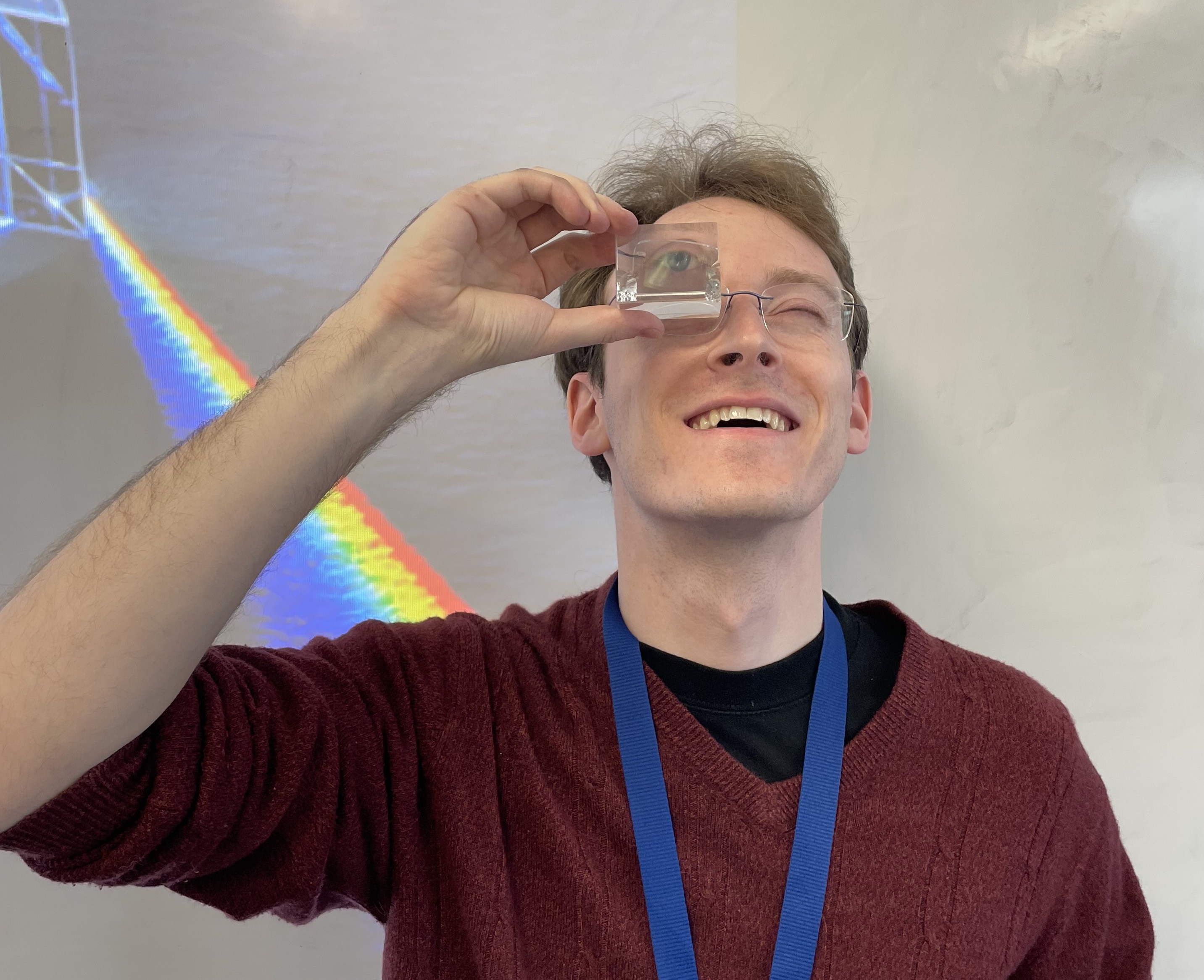
Allen looking through a prism.

Teaching

One of my favorite parts of graduate school was working as a teaching assistant from 2015-2020. In weekly discussion sections, I found that I loved talking with the bright Yale undergrads, and that I wanted a career that was student-centered.

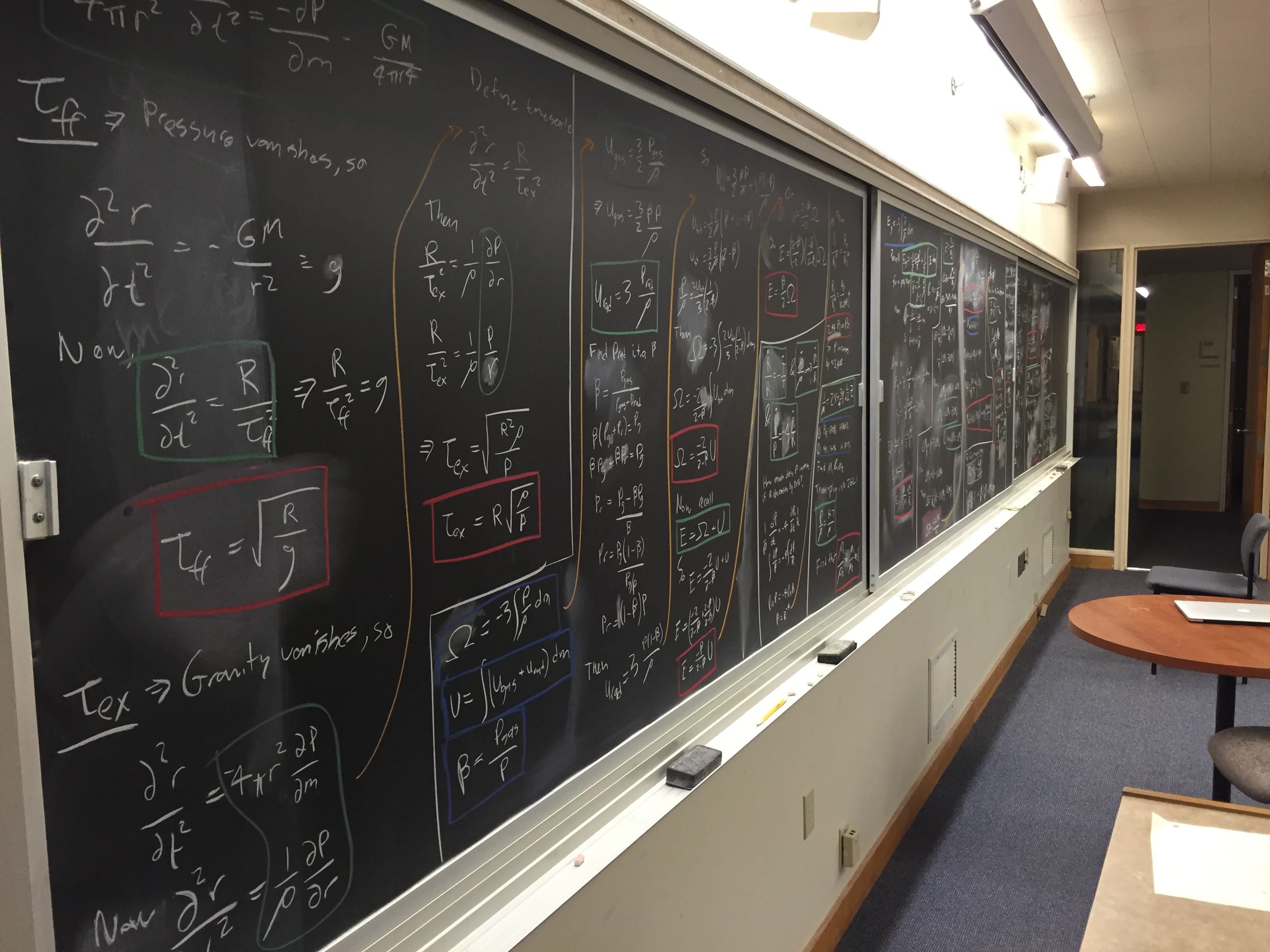
After grad school, I came to ISB in 2020. Here I have taught IB Physics, as well as other math, physics, and computer science-related classes. I get so much energy from the student's curiosity and enthusiasm, which often become self-reinforcing.

Solar Eclipses

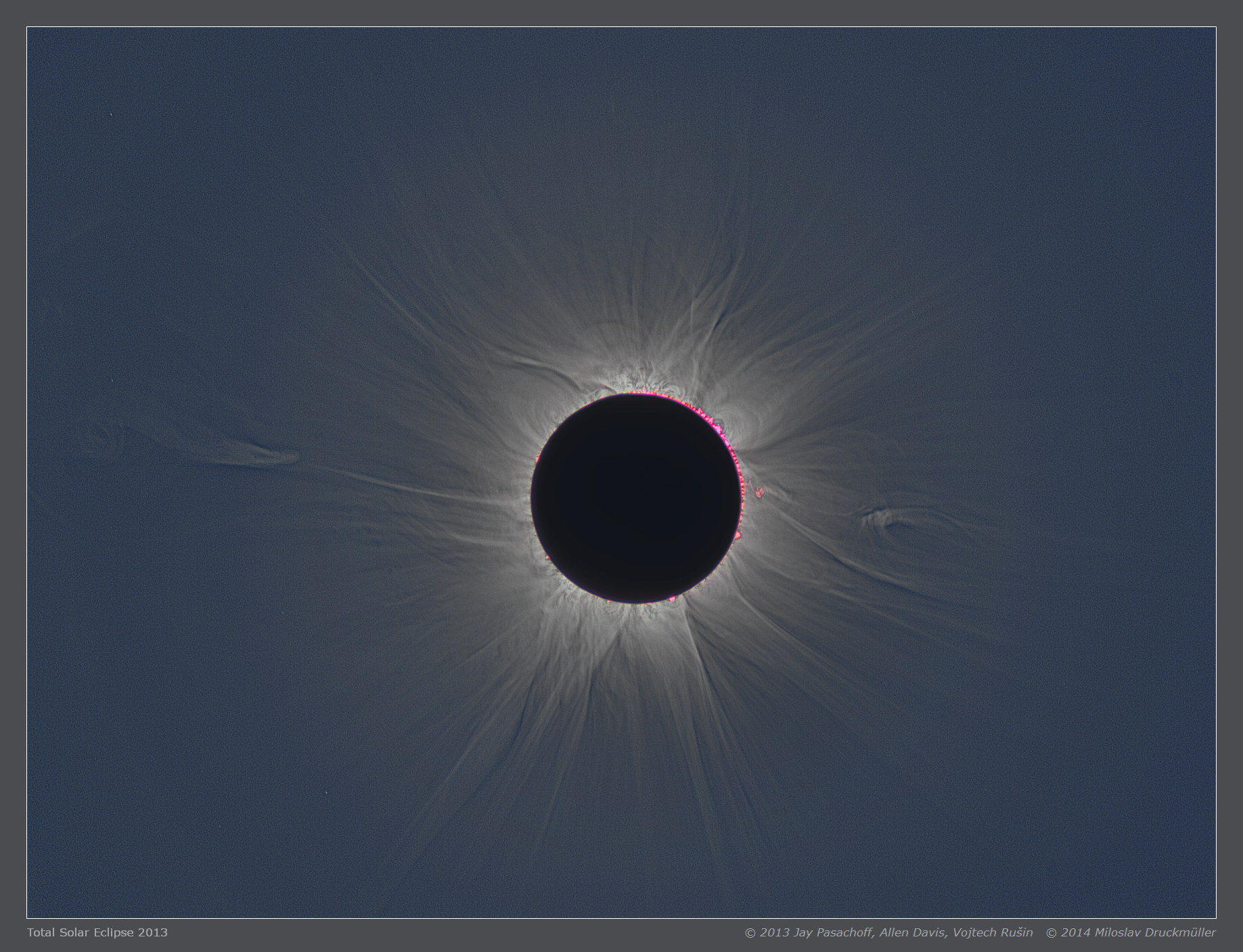
I saw my first total solar eclipse in Gabon in 2013, and I have been hooked ever since. My eclipse photographs several have appeared in scientific journals and other media.

I will be leading a trip of about 70 high school students to Texas to see the April 8, 2024, total solar eclipse.

Hot Jupiters

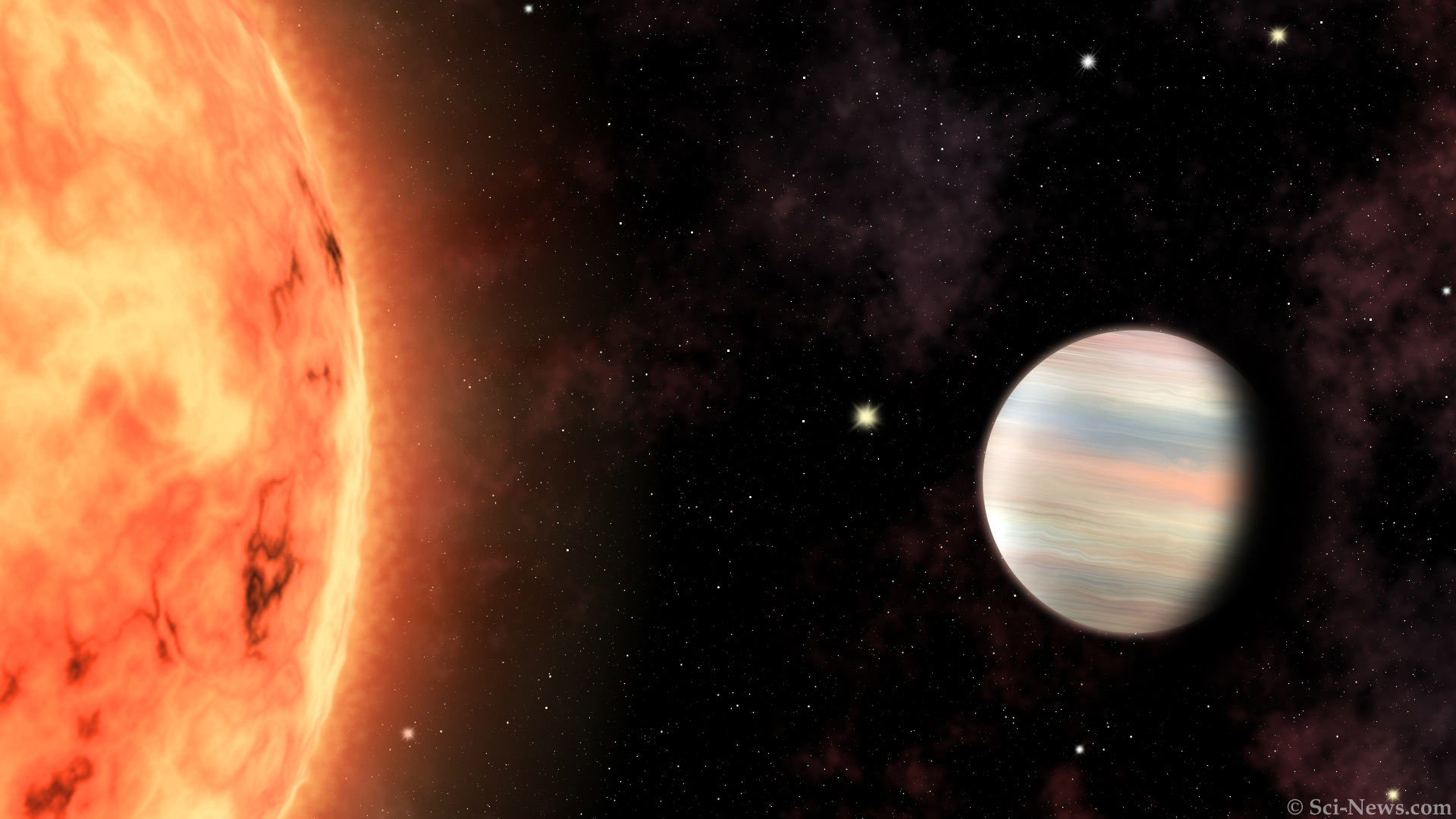
Hot Jupiters are among the easiest type of exoplanets to find, yet they are very rare to form. Mysteries remain as to how these giant planets either form so close to their stars, or perhaps migrate inwards.

From 2018-2019 I collected radial velocity data with the CHIRON spectrograph to confirm planet candidates identified by the TESS mission. I contributed radial velocities that led to the confirmation of nine hot Jupiters. I led the confirmation efforts for two of these exoplanets, TOI-564 b and TOI-905 b.

Stellar Activity

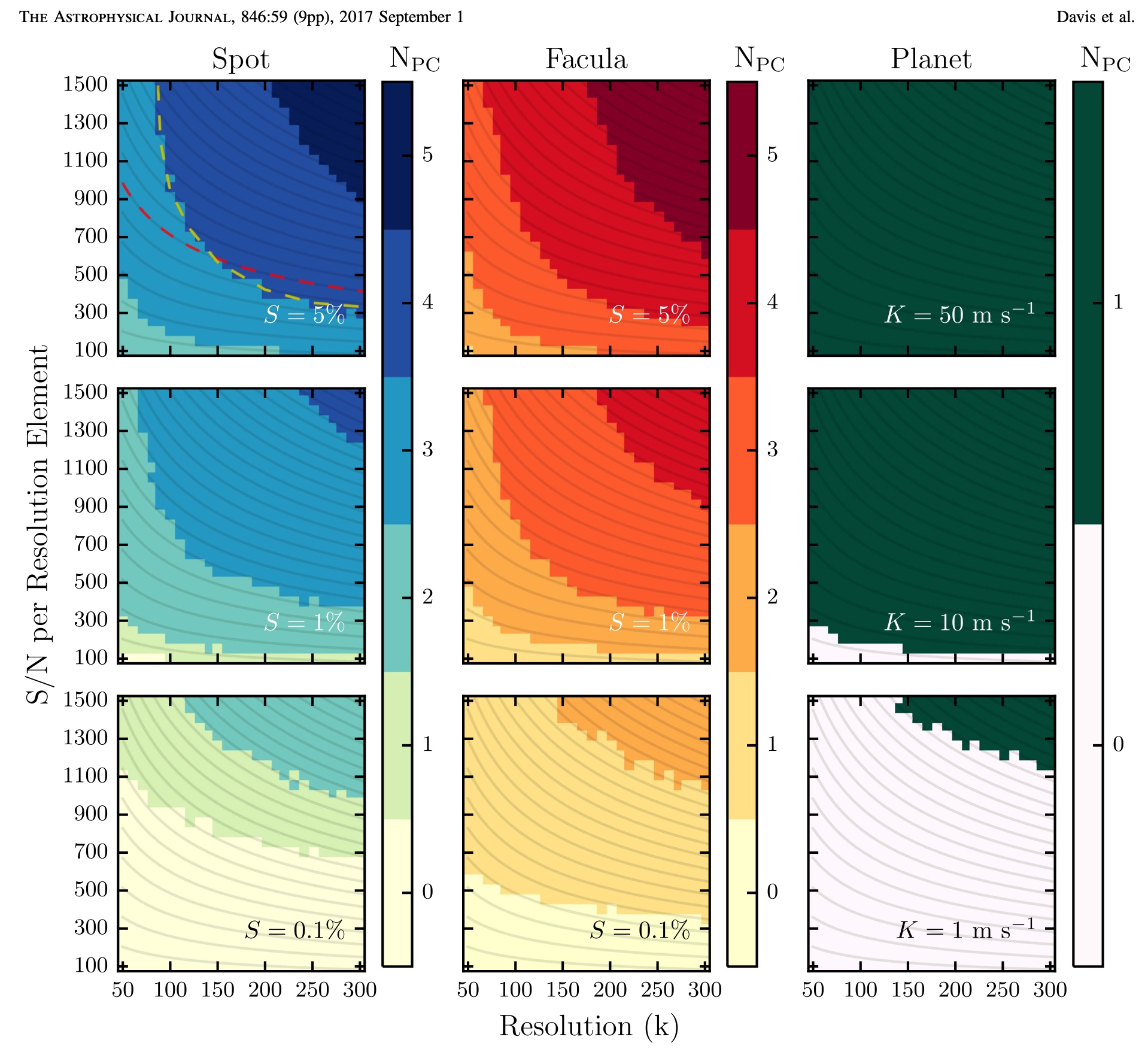
Much of my PhD worked focused on developing methods to disentangle the radial velocity signatures of exoplanets and stellar activity. Although this problem remains unsolved, my work suggests that the information needed to distinguish planets and stellar RVs are encoded in spectra, and that they should be accessible to spectrographs that have sufficient resolution, signal-to-noise ratio, and stability.

EXPRES

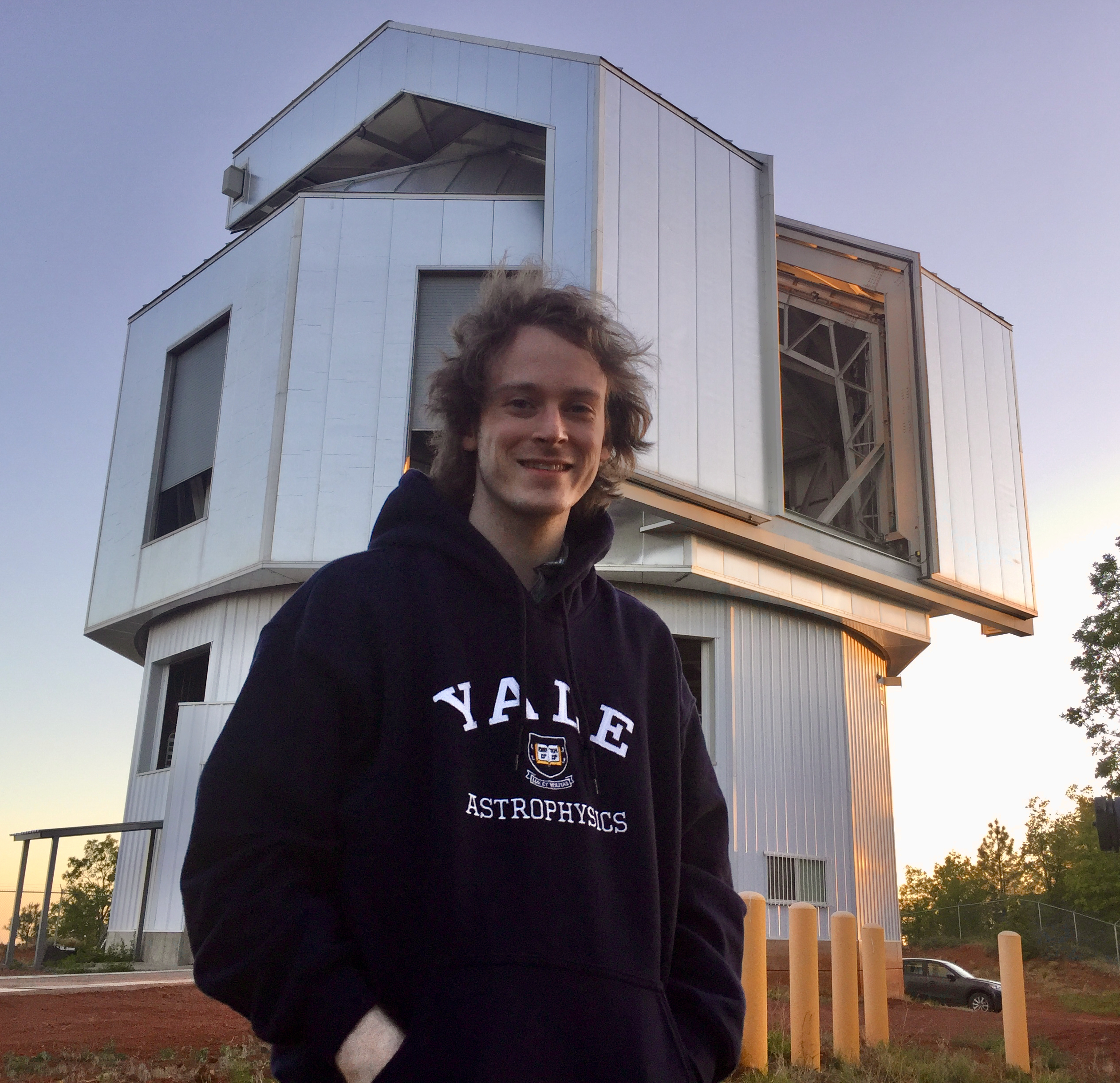
I was a member of the EXPRES (the Extreme Precision Spectrograph) team at Yale from 2014-2019. The instrument aims to enable the detection of Earth-like exoplanets orbiting Sun-like stars using the radial velocity method. I worked on commissioning the instrument, writing its first reduction pipelines, and several of its early observations during the beginning/middle of my PhD work. The instrument is now installed at the Lowell Discovery Telescope in Arizona, where it is achieving on-sky RV precisions of 30 cm/s.