Teaching
International School of Boston
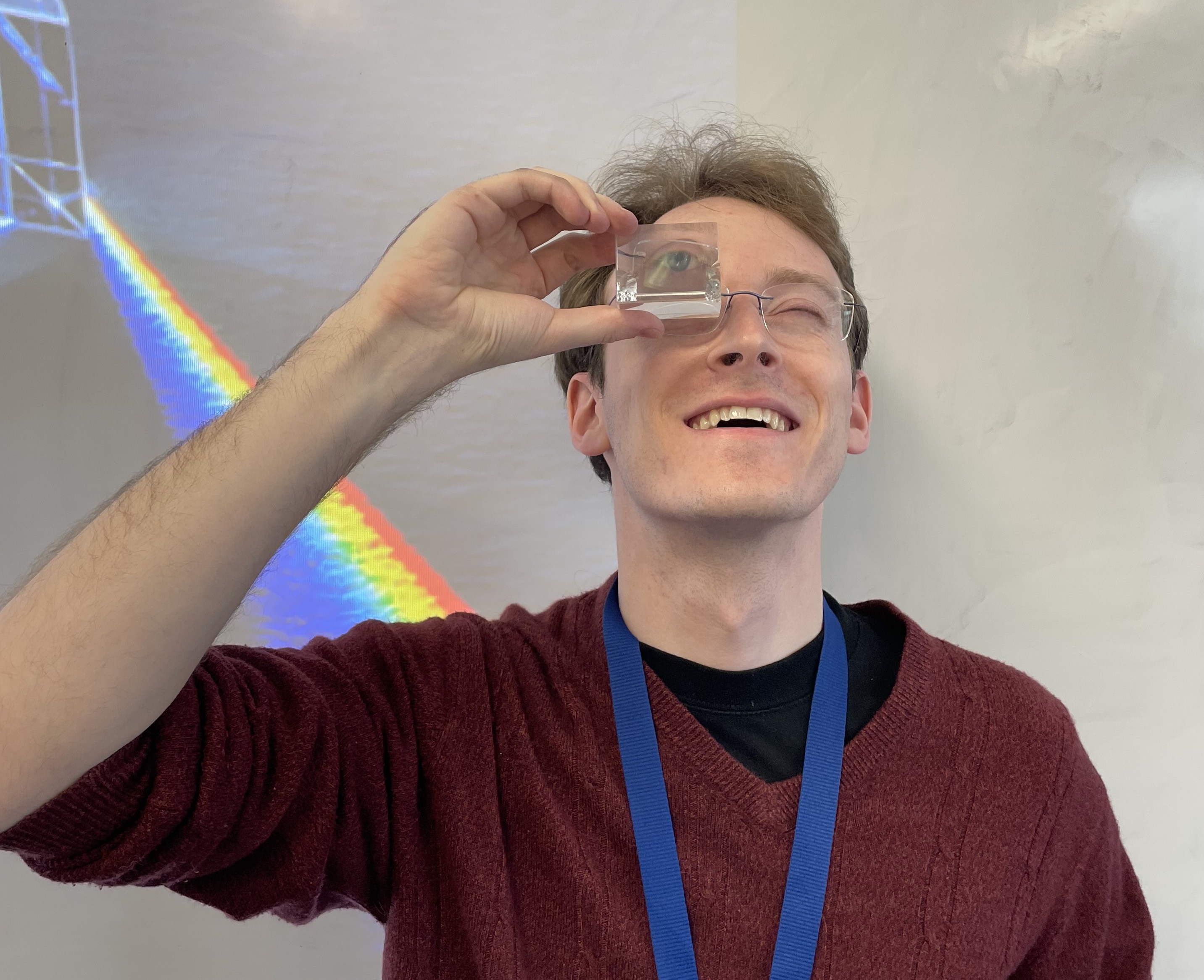
I began teaching at ISB in August 2020, right after defending my Ph.D. Most of my time is spent in the upper school teaching physics, but I also teach mathematics, computer science, and astrophysics when the opportunity arises.
Physics
IB Physics is a two-year course fulfilling the science requirement for 11th and 12th grade students pursuing the International Baccalaureate Diploma. It covers a wide range of topics — mechanics, electricity and magnetism, waves, fields, and nuclear physics — with Higher Level students exploring additional territory including thermodynamics, quantum physics, and special relativity.
MYP Physics is a one-year course for 10th graders. It introduces the core ideas of physics through hands-on investigation and real-world application, building the foundation students will need for IB and beyond.
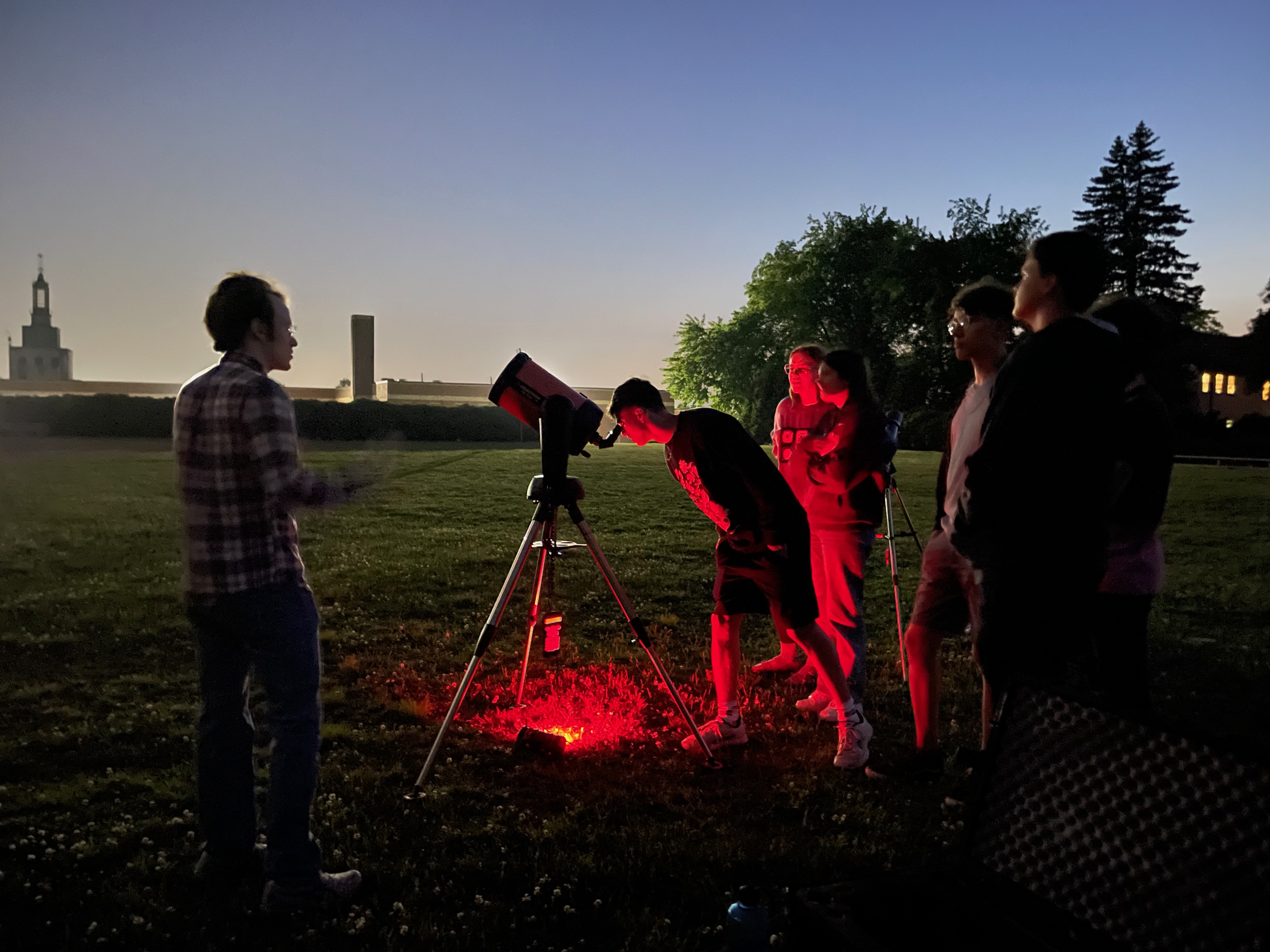
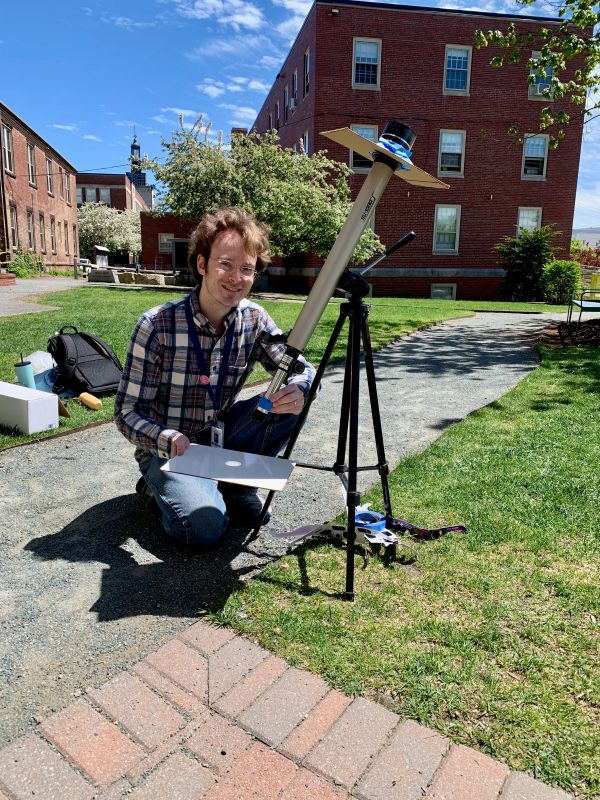
Astronomy Club meets weekly during lunch, where students discuss current events in space science, ask bold questions about the universe, and occassionally chat with invited professional astrophysicists from the Boston area. A few times each year we meet in the evening to observe the planets and the brightest deep sky objects with an 8" telescope. In 2024, we took a field trip to Texas to see the total solar eclipse.
Mathematics
Integrated Math 2 is a course for 10th graders at the standard level. We cover algebra, geometry, and statistics, as well as a unit introducing students to the basics of coding in Python.
Advanced Math Topics is a course I teach in grade 9, 10, and 11 for talented math students pursuing the French Bac. In weekly class meetings I suppplement student's math instruction with more tangential or advanced topics. Examples of topics include linear programming, solving trig equations, Monte Carlo integration, and Euler's method.
Math Enrichment is my only middle school course, intended for motivated 7th graders. As with Advanced Math, I meet with students weekly to explore broad areas in mathematics. Examples of topics include the basics of first-order logic, Euler diagrams, sequences, introduction to Python coding, and fractals.
Computer Science
My background in scientific research gives me an appreciation of the power and importance of programming. I have taken a leading role in integrating programming instruction into our middle school and upper school math programs.
In 2025, I was awarded an AI Grant to develop a high school unit focused on teaching students to productively use AI coding assistance to enhance their ability to take charge of their learning. In this unit, 11th graders with intermediate programming skills, were able to perform PhD-level work identifying genes in DNA with proper use of AI assistance. As a final project, students created games that far exceeded their previous abilities.
Sciences Numériques et Technologie (Digital Sciences and Technology) is a required 10th grade course in the French Bac, which I co-teach. Students learn the basics of Python and html, as well as how to interact with digital images and databases.
Coding Club is a weekly lunch club I advise, which gives high school students the opportunity to pursue self-directed programming projects with my guidance and mentorship. Some students work through Python tutorials; others produce websites, games, or work on independent projects in basic science, finance, or community service.
Yale University
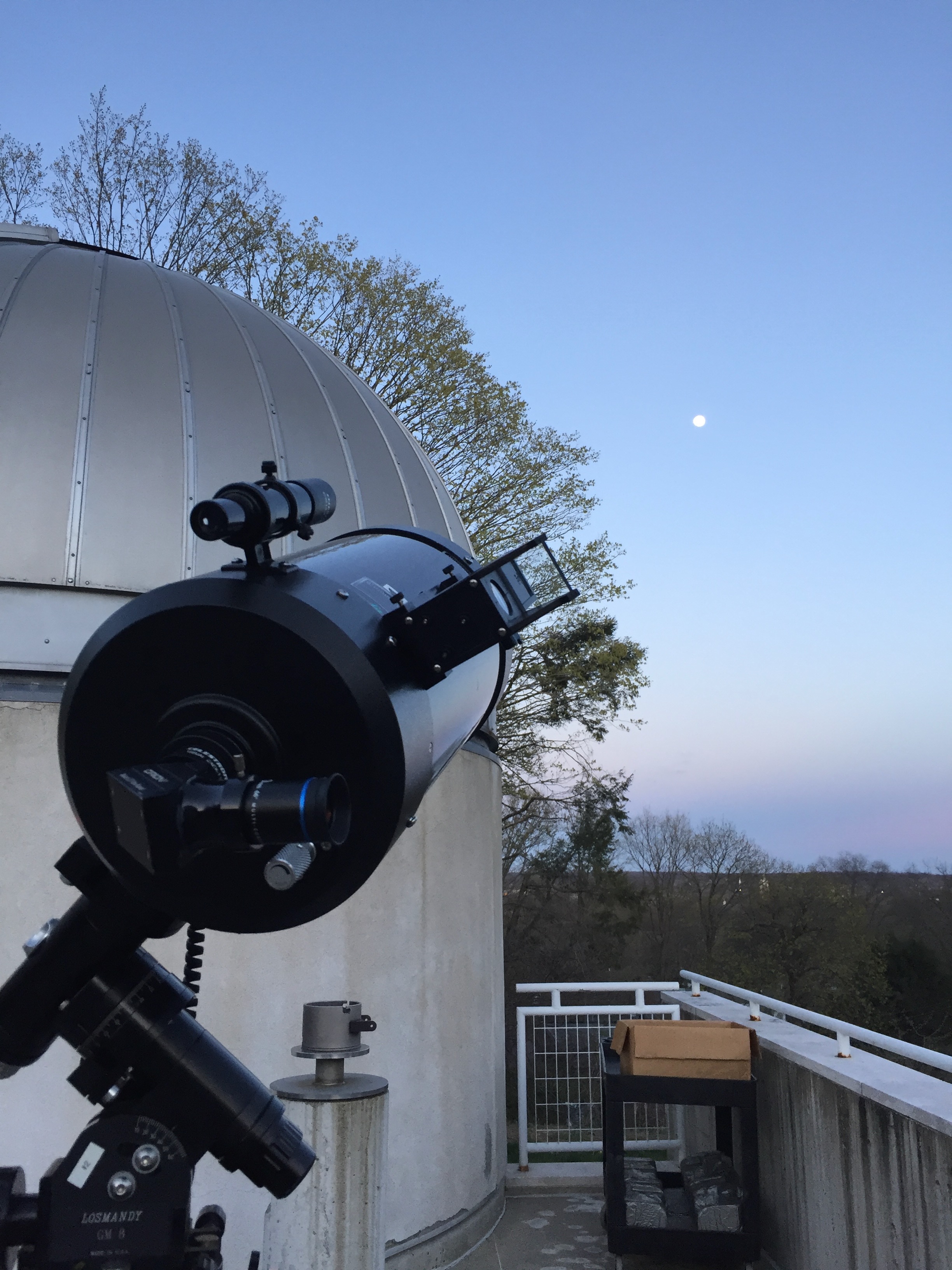
Leitner Family Observatory & Planetarium, Yale University.
One of my most rewarding experiences at Yale was my time as a Teaching Fellow: attending lectures, grading homework and exams, and running weekly discussion sections. This is a duty required of all astronomy grad students, but it is one I embraced. I got so much fulfillment out of talking with my discussion section students, helping them to explain tricky concepts, and indulging their curiosity wherever it led. This experience is ultimately what drove me to change my career path towards full time teaching.
Leitner Family Observatory & Planetarium
At Yale, I had the opportunity to work at the Leitner Family Observatory & Planetarium. Here, I gave planetarium shows to local school groups, Yale departmental holidays parties, and the general public. I also volunteered frequently for public observing nights, where I would set up small telescopes and introduce the general public to the wonders of lunar craters, the moons of Jupiter, and planetary nebula.
Teaching Fellow
While at Yale, I had the opportunity to serve as a Teaching Fellow for 5 semesters.
- ASTR 130: Origins & Search for Life in the Universe, Prof. Debra Fischer (Fall 2015, Fall 2016, Spring 2020)
- ASTR 135: Archaeoastronomy, Prof. Michael Faison (Spring 2016)
- ASTR 120: Galaxies and the Universe, Prof. Michael Faison (Spring 2015)
"Passionate, knowledgeable, and patient."
"The best explainer of things I have ever learned from."
"Allen was excellent — helping to explain and review the course material with clarity and precision. He definitely helped to solidify my understanding of the course material."
"He never made me feel dumb despite my fair share of simple or redundant questions."
"A truly phenomenal teaching assistant. Allen's explanations were always clear, and he knew how to guide us through answering our questions. Additionally, he was more than willing to take time outside regular section hours in order to answer any questions that students had."
— Selected from Yale course evaluations, ASTR 130, Fall 2016
Williams College
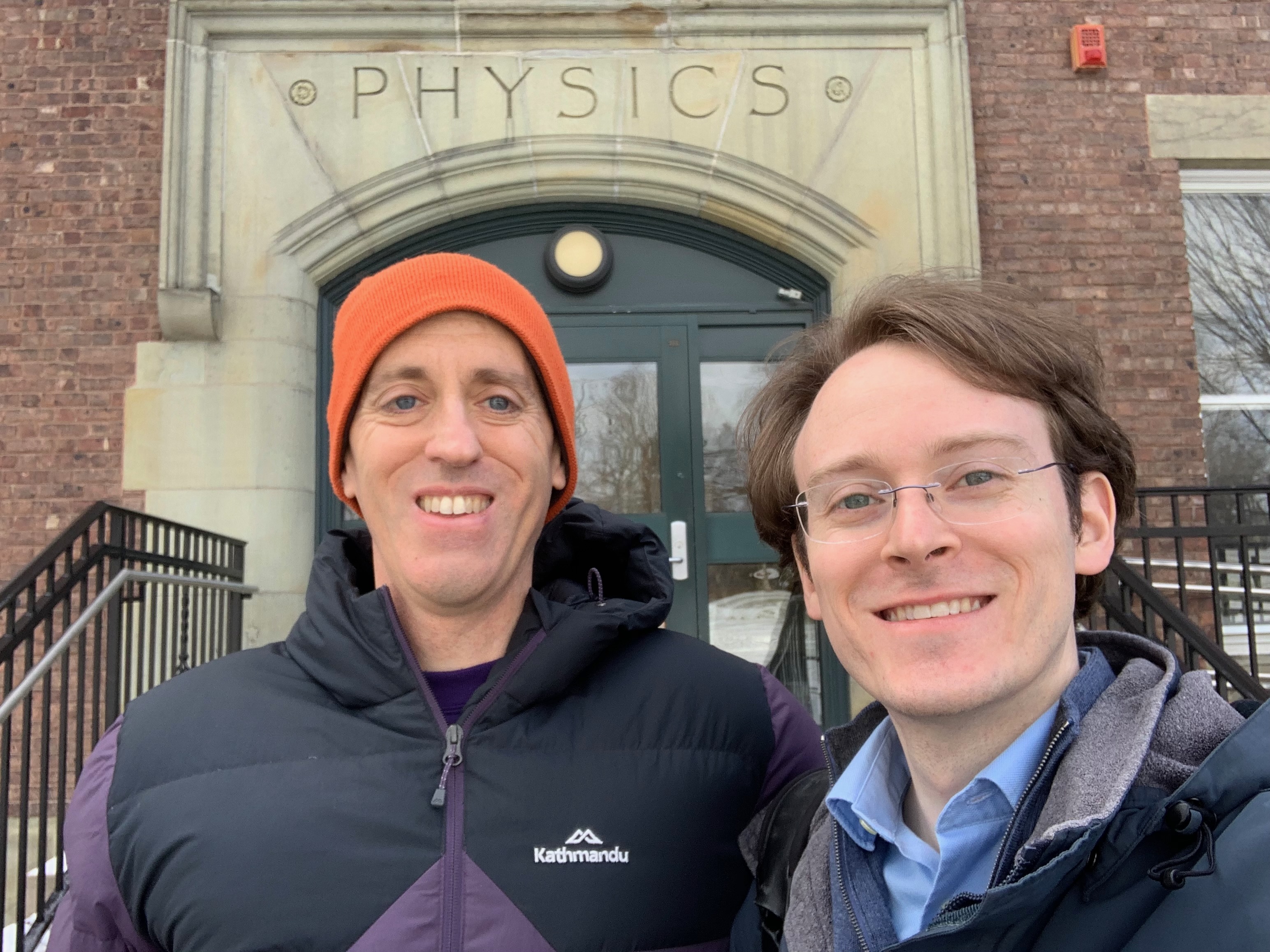
With Prof. Wittenmyer at Williams College, 2025.
At Williams, I had my first formal taste of teaching. I spent three years as a Teaching Assistant at Hopkins Observatory, helping my fellow undergrads complete lab projects involving our school telescope. I also became the Head TA at Milham Planetarium. In this role, I presented lectures to school groups, astronomy classes, and the general public. This work was a continuation of my love of planetariums that started in childhood, ever since I started volunteering at the Mystic Seaport Planetarium back in 7th grade.
More recently, I've returned to Williams as an invited guest lecturer in undergraduate astronomy courses covering planets, the Milky Way, and stellar physics.
- ASTR 16: Planets and Search for Life, Prof. Rob Wittenmyer (2018–2020, 2022–2023, 2025)
- ASTR 104: Milky Way Galaxy & Universe, Prof. Jay Pasachoff (2017)
- ASTR 101 Stars: From Suns to Black Holes, Prof. Jay Pasachoff (2015)