Hello there!

My name is Allen Davis. I am a teacher at the International School of Boston in Cambridge, MA. I earned my Ph.D. in Astrophysics from Yale University in 2020, where I researched new techniques to discover exoplanets.

Today, my goal is to give young people the opportunities and inspiration to explore our universe, improve our planet, and to become the best version of themselves.

My Background (CV)

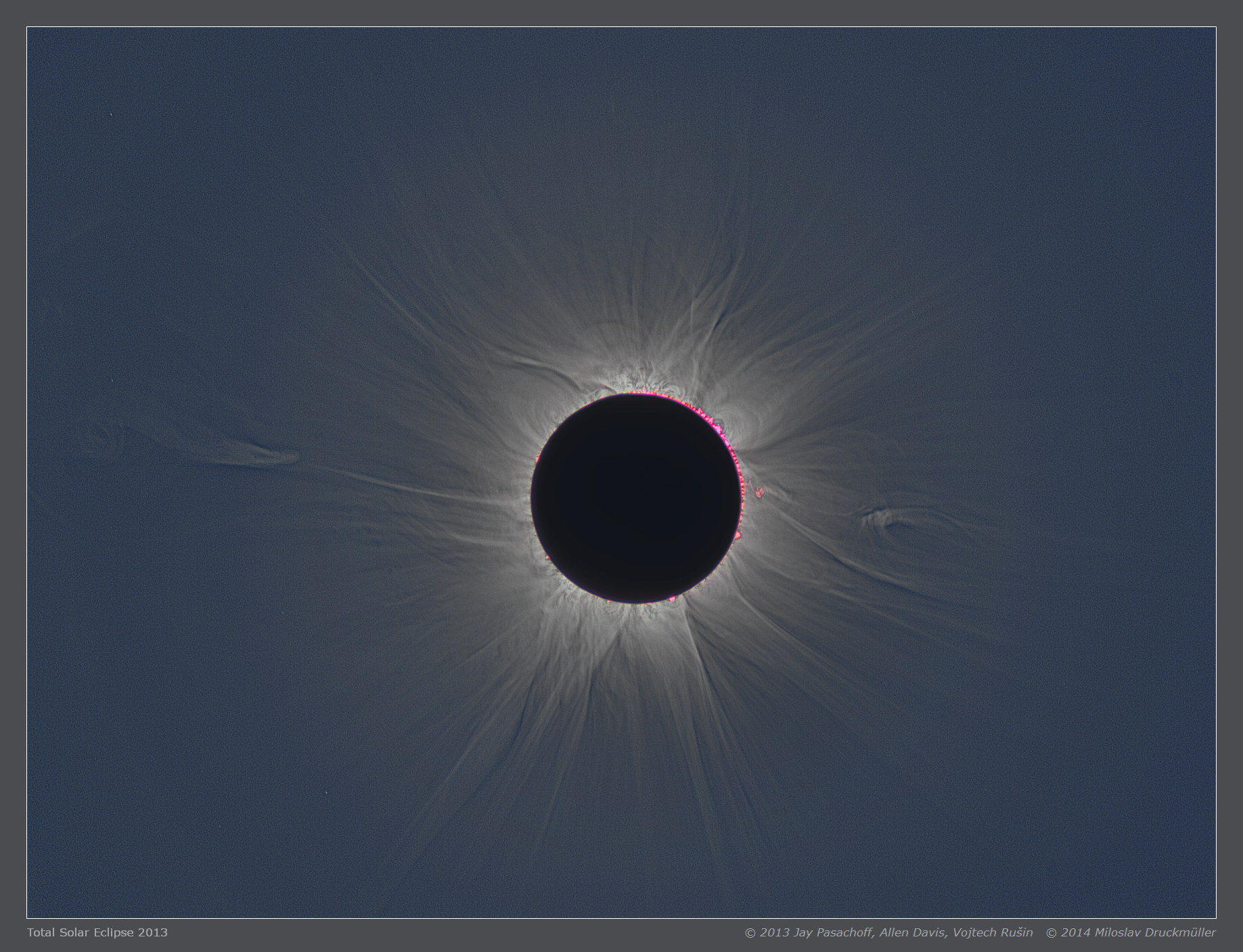
I graduated with my B.A. in Astrophysics from Williams College in 2014. My thesis work on Kuiper belt object occultations and the 2013 solar eclipse was carried out under the mentionship of Jay Pasachoff, and it was awarded Highest Honors.

I completed my Ph.D. work at Yale University in 2020. My dissertation, advised by Debra Fischer, centered on improving our ability to detect small exoplanets. My research was supported by a National Science Foundation Graduate Research Fellowship.
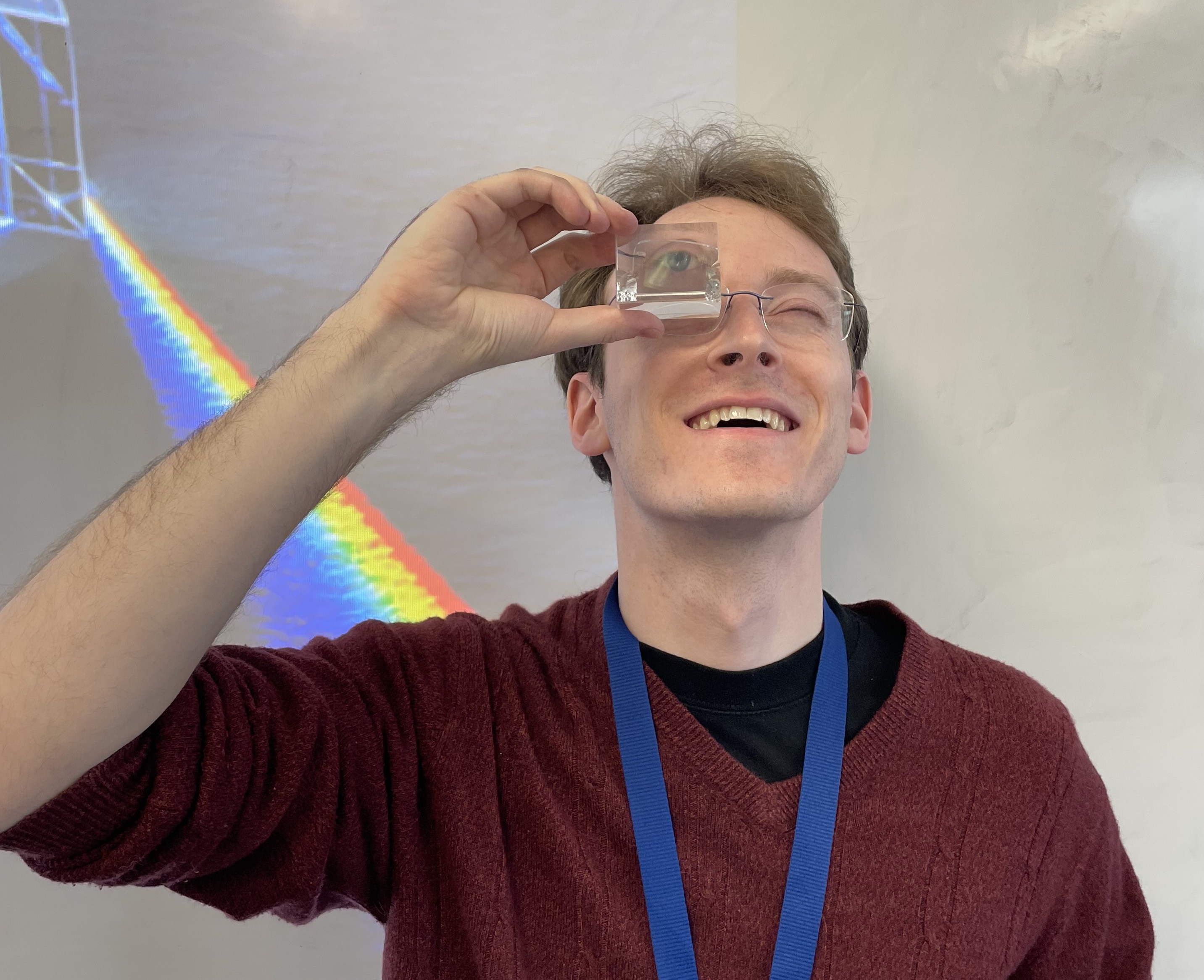
Allen looking through a prism.

Teaching

It took me until graduate school to realize that my passion was science communication. As a Teaching Fellow at Yale, my love of teaching crystalized and led me to pursue this career full time.

I have been teaching at the International School of Boston since finishing my Ph.D. in 2020. I have taught IB Physics, as well as other math, physics, and computer science-related classes. I get so much energy from the student's curiosity and enthusiasm.

Solar Eclipses

Solar eclipses are, in my opinion, the most spectacular natural phenomenon in existance. Seeing the moon cover the last sliver of the Sun evokes an unforgettable sense of awe. I have seen 3 total solar eclipses so far.

My eclipse photographs have appeared in several scientific journals and other media. In 2024, I led a trip of 36 high school students to Texas to see the total solar eclipse.

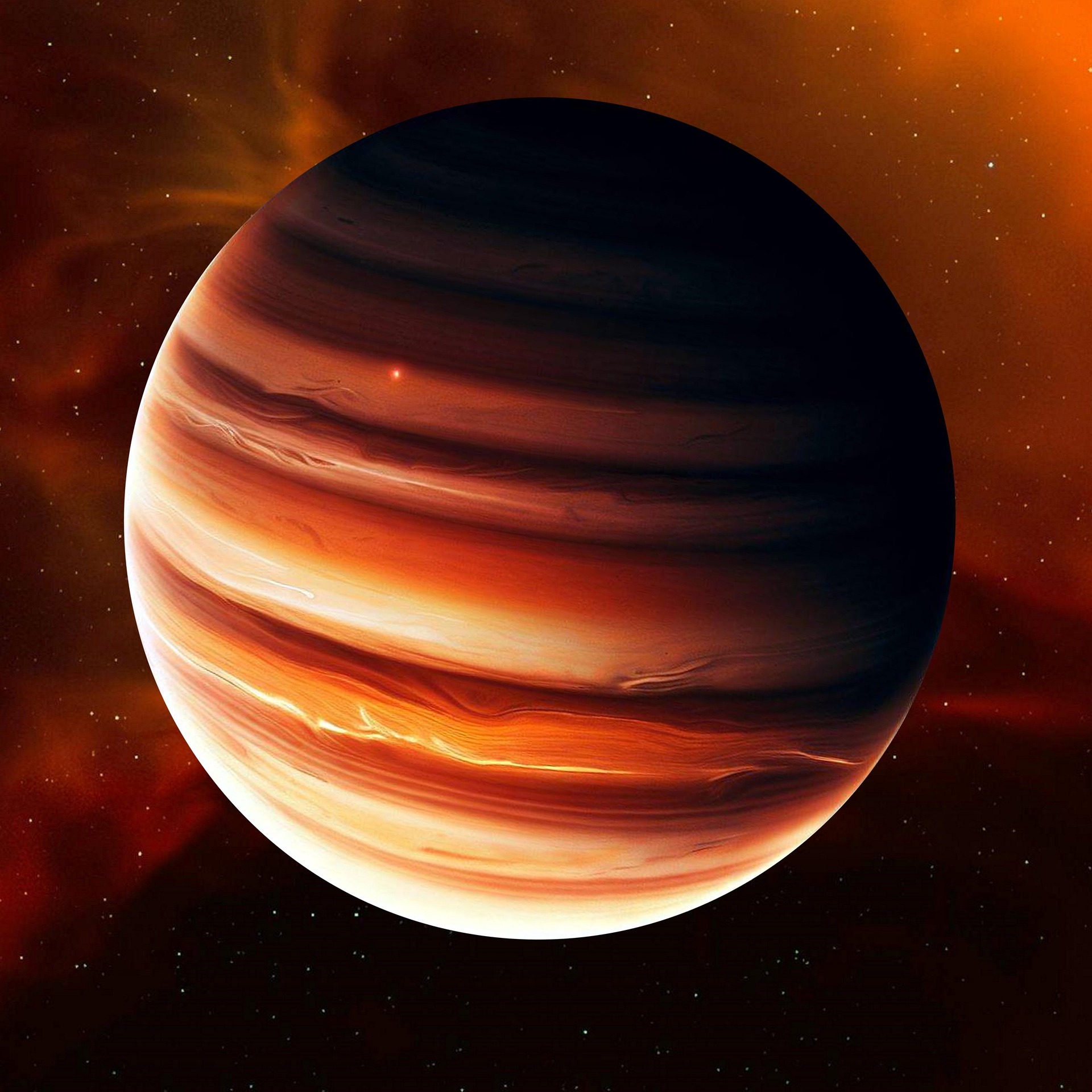
Diagram of the TOI-564 system showing a grazing hot Jupiter transiting its G5V host star, with a distant M3V companion.

Exoplanets

Exoplanets, planets circling stars other than the Sun, are among the most exciting objects in astrophysics. They are closely tied to humanity's understanding of our place in the universe, and to the search for extraterrestrial life.

My doctoral research at Yale focused on finding and characterizing exoplanets using the radial velocity method. Using the CHIRON spectrograph, I confirmed nine hot Jupiter candidates identified by NASA's TESS mission, leading the efforts for TOI-564 b and TOI-905 b. I also developed on statistical techniques (e.g., PCA) to separate planetary signals from stellar noise, which is a key obstacle to detecting Earth-like planets. Finally, I worked on the EXPRES spectrograph during its development and commissioning periods; this planet-hunting spectrograph now achieves precisions of 30 cm/s at the Lowell Discovery Telescope.